Male-preference primogeniture
Fire & BloodMale-preference primogeniture is the principle that a male claim takes precedence over a female claim in succession to the Iron Throne. Its force in the histories of the Targaryen dynasty rests chiefly on the Great Council of 101 AC: the lords’ choice of Viserys over Laenor was widely treated as a binding precedent against a woman inheriting the throne or transmitting a claim to her male descendants. Yet the rule supplied a priority, not a complete answer to every succession crisis; when the regents later tried to apply it, they could not agree on who the eligible male claimant was.
Scope and Dynastic Context
The principle concerned succession to the Iron Throne, not a uniform rewriting of inheritance throughout the realm. Aegon I had largely left each conquered kingdom’s customs in place, including its laws of inheritance and succession. The distinction matters: male preference became a powerful royal precedent without erasing the different local arrangements that continued under the Targaryen kings.
Succession also depended on the births, marriages, and survival of members of the royal family. Aegon I took both Rhaenys and Visenya to wife, and each queen bore him a son. Aenys, Rhaenys’s son, married Alyssa Velaryon; their children included sons as well as daughters, among them Rhaena, Viserys, Jaehaerys, and Alysanne. These family lines made the ordering of male and female claims consequential, but they did not by themselves resolve what should happen when those claims competed. The Council’s decision would provide the precedent by which later generations argued over that question.
The Great Council of 101 AC
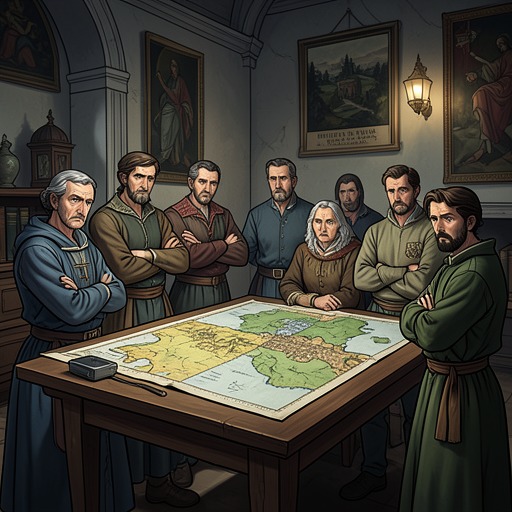
The immediate contest arose after the deaths of Jaehaerys’s sons and heirs. Corlys Velaryon and Rhaenys sought recognition for their son Laenor, gathering support from lords including Boremund Baratheon and other prominent houses. Their wealth, influence, and advocacy could not overcome the assembled lords’ preference for Viserys. The vote was reported to have exceeded twenty to one, although the maesters who counted it did not publish the exact tally.
Jaehaerys had not attended the council. Once its decision reached him, he thanked the lords and granted Viserys the title Prince of Dragonstone, formally recognizing him as heir. Corlys and Rhaenys accepted the result despite their disappointment, faced with a margin too overwhelming to contest. In the eyes of many, the council’s choice established that the Iron Throne could not pass to a woman or through a woman to her male descendants. The result therefore did more than select one successor: it supplied later claimants and councillors with a precedent for ranking competing lines.
Application and Unresolved Questions
The precedent returned to the fore after the deaths of Corlys and other figures had made the young Aegon III’s own succession seem uncertain. His regents considered several possibilities. Jaehaera’s claim was described as strong, but the councillors rejected the prospect of placing the young queen on the throne. Aegon himself proposed his cupbearer, Gaemon Palehair, recalling that the boy had once been king; the regents considered that impossible as well.
The council then turned to Aegon’s half-sisters, Baela and Rhaena, whose popularity and public visibility made them plausible candidates to many. They were the only claimants the narrative identifies as ones the realm might accept at that point. Their relative merits divided the regents: Rhaena was praised as a potential queen and had a dragon, while Baela was older by birth but was criticized as too unruly; others objected that Baela’s dragon had brought down the late king. These arguments exposed the competing considerations around succession, but they did not displace the question of sex and precedence.
Grand Maester Munkun ended the debate by invoking the Great Council’s ruling: because both claimants were women, he argued, the lords had to abide by male primogeniture. When Tyland Lannister asked who the male claimant was, Munkun could not name one and said he would investigate. The crucial issue thus remained unsettled. The precedent established a male claim’s priority over a female one, but it could not identify a successor when the council believed the male claimants had all been killed.
Political Significance
Male-preference primogeniture functioned as a precedent invoked in political argument, rather than as a self-executing answer that removed the need for agreement. The Great Council had settled one dispute by an overwhelming vote and the king’s subsequent recognition of Viserys. Later, Munkun treated that decision as a rule binding the regents, but the absence of an agreed male candidate left the succession question open. The contrast reveals the precedent’s double effect: it narrowed which claims could be advanced while making the search for an eligible male successor decisive. Its authority endured, but its application remained dependent on who could plausibly claim the throne and whether the realm’s powerful figures would accept that claim.